
Welcome to
Friends of Square Pianos
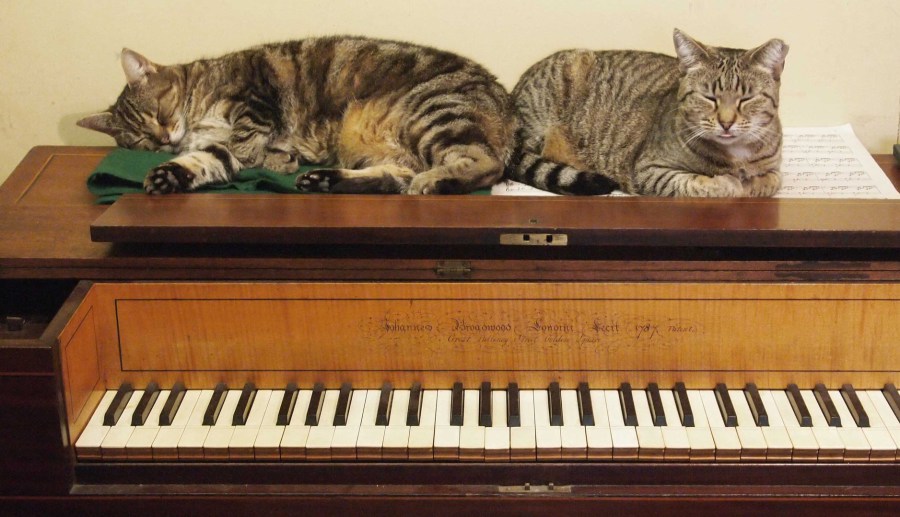
This is a website for anyone who owns, or would like to own, a square piano, or possibly a spinet. Or anyone who is just interested, and would like to learn a little more.
Please get in touch with me, David, on friends.sp@btinternet.com with questions, comments, or just to say 'Hello'. This is a site for everyone, especially those new to the world of Square Pianos. And of course, we very much appreciate the support of those with more experience.
Update April 26th
Harpsichord by Rubio (after Hass) 1985
For Sale
Buntebart & Sievers 1790s For Sale
Harpsichord by Rubio (after Hass) 1985
For Sale
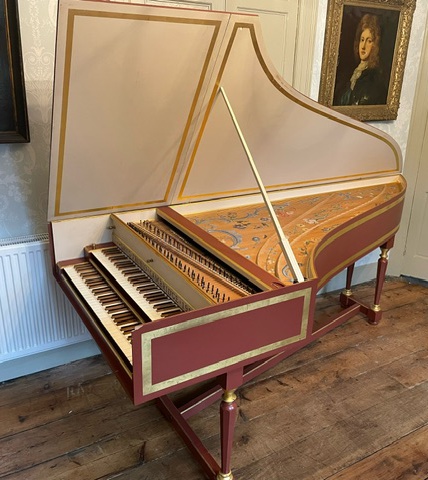
Recently used for concerts, including with the Academy of Ancient Music, this is surely the finest harpsichord to be offered for sale on these pages. Please see the Sale Page for pictures and details.
Buntebart & Sievers 1790s For Sale
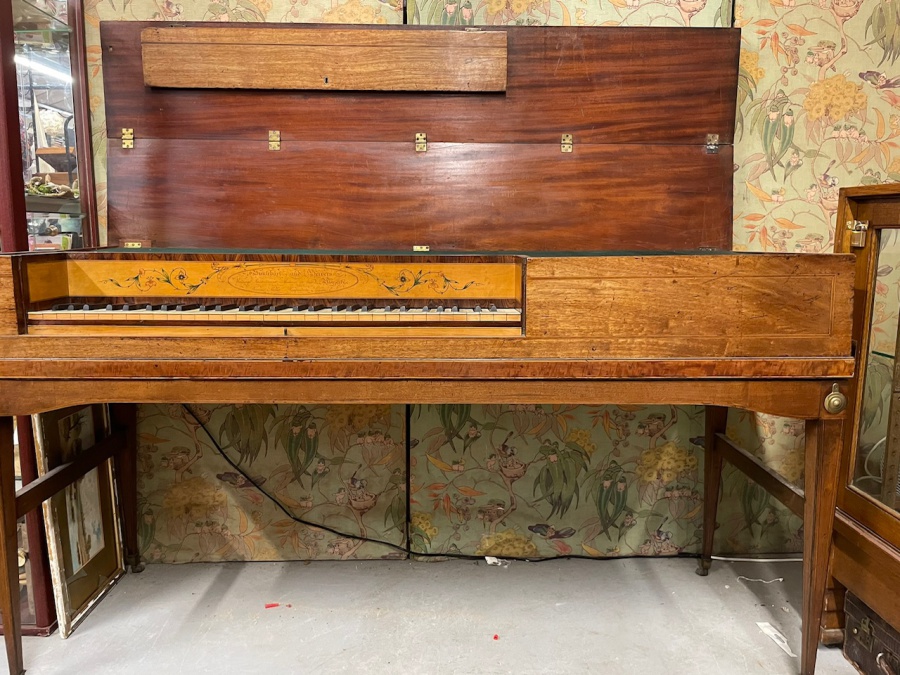
Johann Christian Buntebart was, like Johannes Zumpe, a friend of J C Bach. All three came to England in the 1760s, probably with the encouragement of Queen Charlotte (formerly of Mecklenburg-Strelitz) who was known to have a keen interest in music. Zumpe was effectively the inventor of the piano in England, and Buntebart was his partner from 1768 until 1778. Most 'Zumpe' pianos carry both names. We believe that Buntebart was a pall-bearer at the funeral of J C Bach in 1782. After Zumpe's death in 1783, from then until about 1792 he was again active in partnership with another fellow contryman, Sievers (given name not known) until some time after 1792. So this lovely little piano has a pedigree dating back to the very beginning of piano-making in England. Please see the Sale Page for pictures and details.
Spinet by John Storrs For Sale
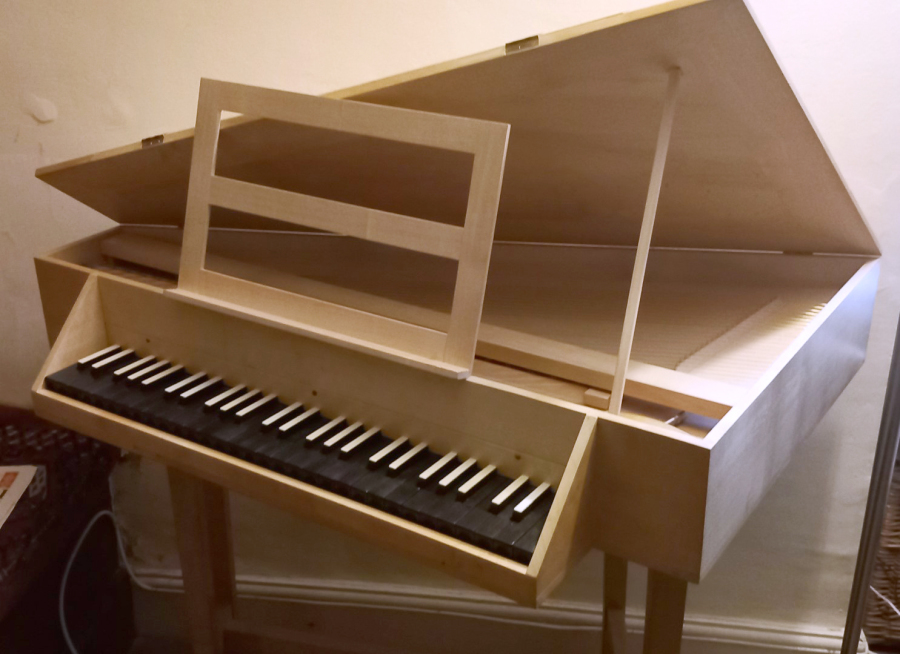
I have great respect for John Storrs kits. He employed techniques, very advanced for the time, to ensure that all the hundreds of little holes were in the right place, and some ingenious devices to assist in accurate assembly of the casework. These factors gave amateurs the best possible chance of achieving a good result. This example was carefully built in the early 1980s, and has been with the same family ever since. Please see the Sale Page for details.
Broadwood 1839 For Sale
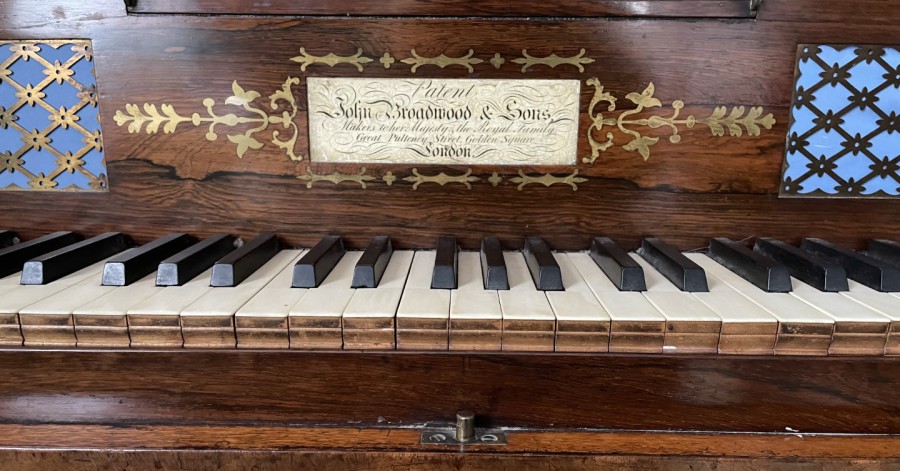
This handsome 1839 Broadwood, was restored in 1994 and maintained in playing order. Please see the Sale Page for details.
Clavichord by John Morley c. 1962 For Sale
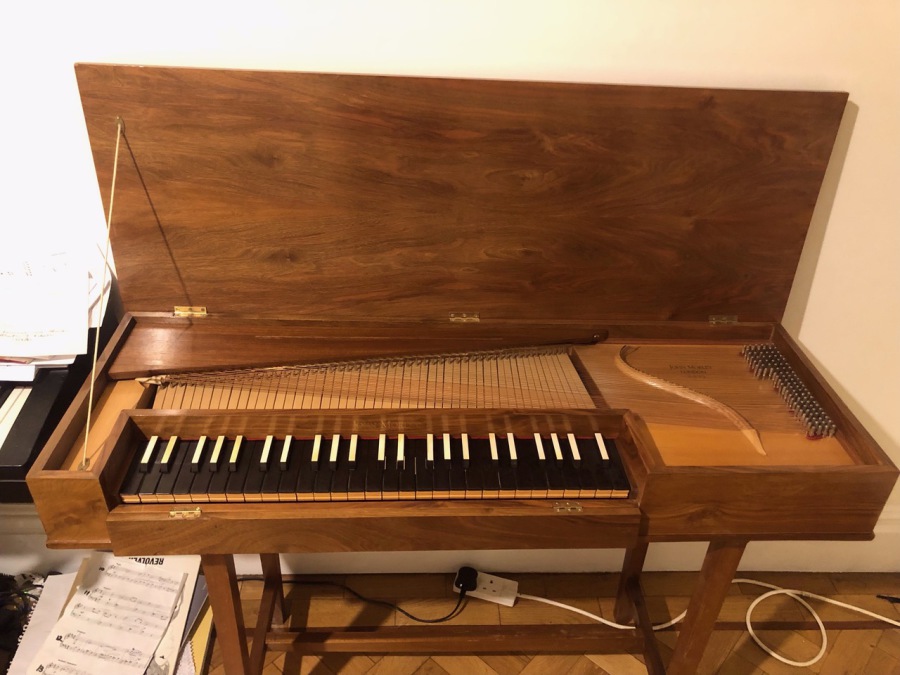
The five-octave clavichords by John Morley are well-built and dependable. This walnut example from c.1962 is now offered for sale. Please see the Sale Page for details.
Spinet by Roger Murray 1982 Sold

This beautiful spinet was made by Roger Murray in 1982, based on the anonymous 1708 instrument in the Royal College of Music collection. Please see the Sale Page for pictures and full details.
Square Piano by Freudenthaler
in Mallam's Abingdon Auction March 25th
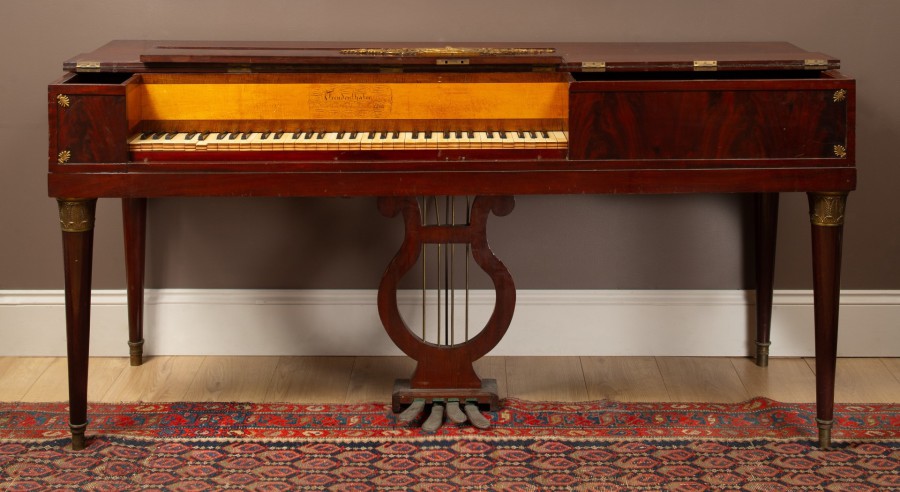
Ten instruments by this firm are recorded in Clinkscale, six of them in museums in France. This elegant example was Lot 77 in Mallam's auction in Abingdon on Monday, 25 March. Sold for £350 hammer price. Please see the Auction Page for pictures and details.
Clavichord by Clayson & Garrett - Sold
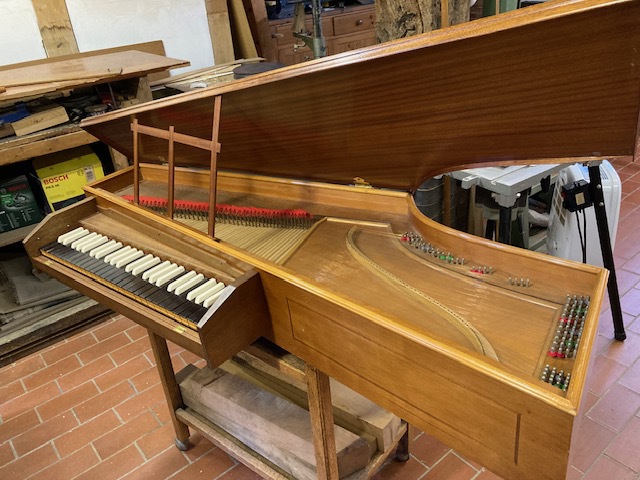
This elegant clavichord by Clayson & Garrett is longer than most with a C compass, and the greater string-length offered the prospect of a good tone. Please see the Sale Page for details.
An Original English Spinet
by John Kemys of Bristol, c 1770
Sold
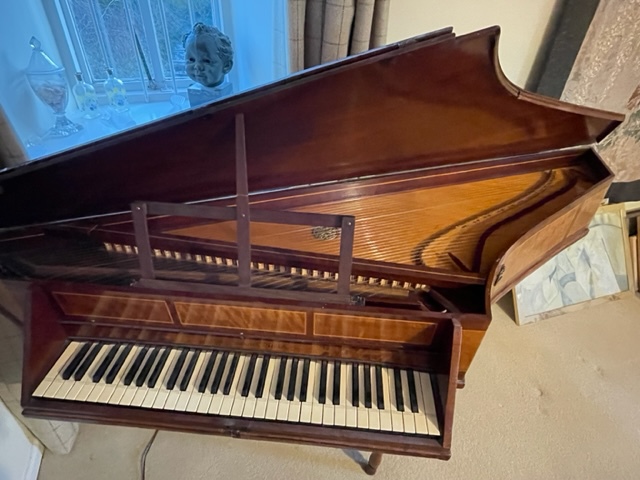
Original English spinets (my favourite instruments) do not often appear for sale, and it is my privilege to present this 'long lost' instrument by John Kemys of Bristol for sale. Please see the Sale Page for pictures and details.
NORVIS 2024
I'm happy to give publicity to this splendid event which is being held in County Durham in August this year. Please see the Events Page for details.
Plans for Keene & Brackley Spinet -
Now Affordable!
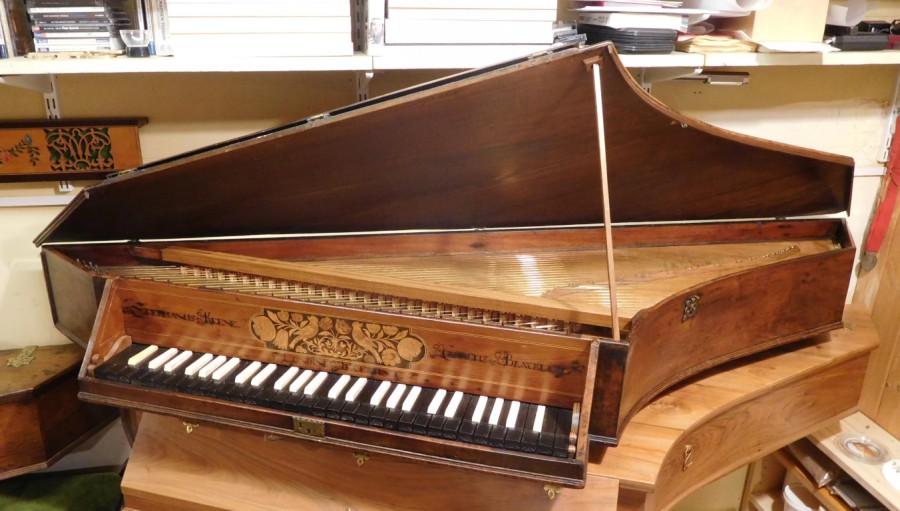
The famous Keene and Brackley spinet is rightly the model for many reproductions, both amateur and professional. I am happy to announce that by courtesy of the copyright owner of John Barnes' original plan, we are now able to offer copies at an affordable price; they are now available through Friends of Square Pianos for just £20, plus carriage at cost. Please note that this is the original plan taken from the original instrument in the picture, not the EMS kit version which had two added sharps for GG# and d3#.
Even if you are not going to build an instrument yourself, anyone with an interest in spinets will find this plan fascinating.
Please see the new page Plans For Sale for details of plans of spinets, harpsichords, and clavichords offered at reasonable prices.
Bespoke Tuning Hammers
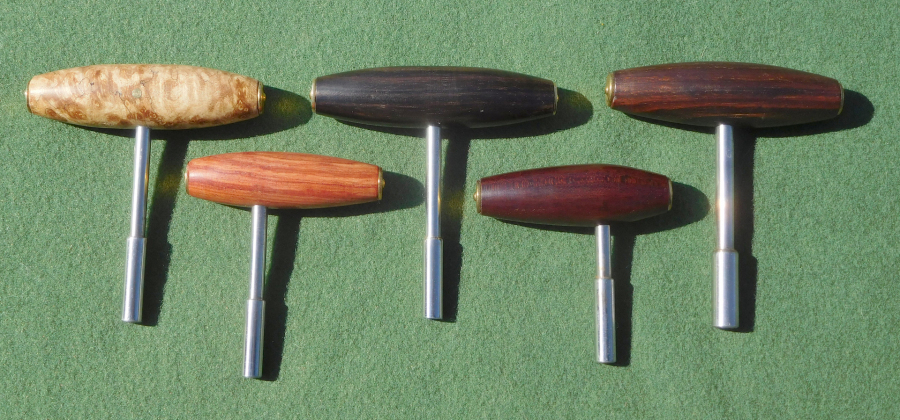
Early keyboard Instruments, whether originals or replicas, do require more frequent tuning than modern iron-framed pianos. The costs of professional tunings mount up, and it can also be a problem finding a tuner who is happy to work with our ancient instruments. For this and other reasons, most of us do our own tuning. To offer some help to those thinking of having a go, I have prepared a short PDF guide, available on request.
It is very important to have a properly-fitting tuning hammer, which should bear on a good portion of the two flat faces of the wrestpin (tuning-pin). If the fit is too sloppy, the corners of the pin and the socket of the tuning hammer will be damaged, and the backlash makes accurate tuning difficult anyway. If it is too small, it will grip the top of the pin only, with the same result.
Tuning-hammers are available from Lucy Coad or David Law - see 'Suppliers' page of this website. Alternatively, I am now able to offer a limited number of hand-made hammers tailored to your own pins, either directly or via a template. Please see the Tuning and Tuning Hammers page for details
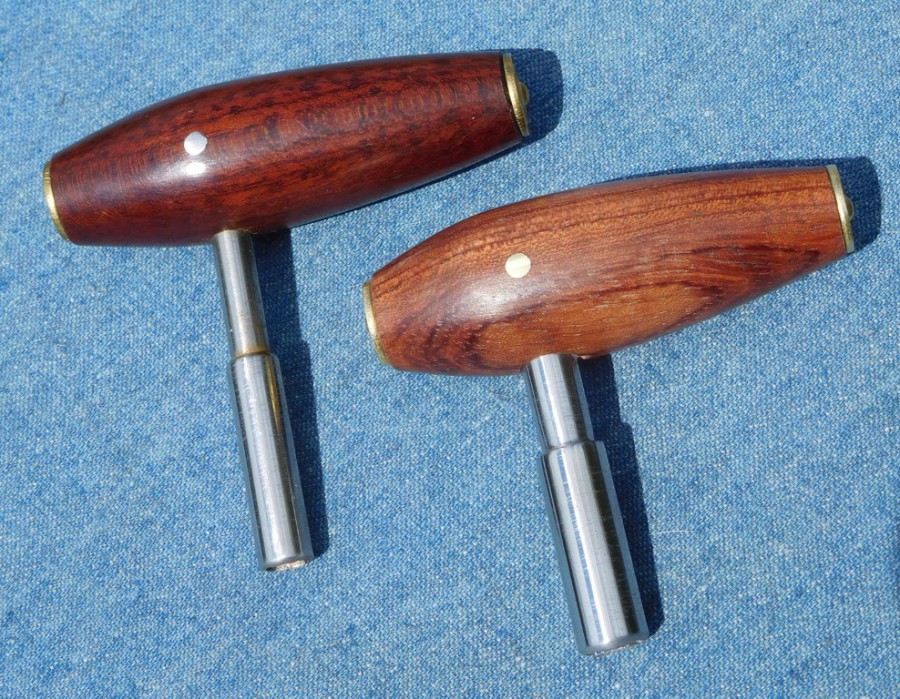
I have made a number of very short and lopsided hammers; these have proved popular with owners of Broadwoods and other pianos with the pins at the back, and also with spinet owners. In both cases the lid makes tuning difficult (unless it can be thrown right back) and these special hammers can help. They don’t look as elegant as the long-stemmed symmetrical type, but they are quite practical!
The Spinets of the Hitchcock Dynasy - Names, Numbers, and Dates
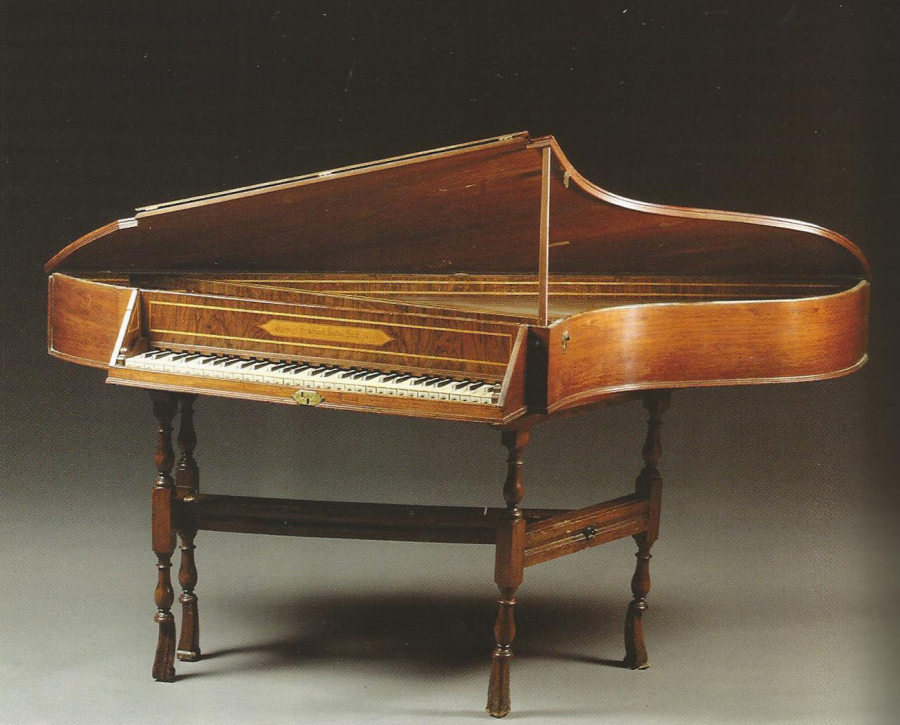
The second of these two essays builds on the first ('1664 and All That' - see below) and offers a new interpretation of the data concerning the establishment of Thomas Hitchcock as the leading spinet maker. It explains the somewhat confusing numbering sequences, their relationship to dates of manufacture, and the change on the nameboard from Thomas to John. As before, the piece is rather long to transfer directly to this page, so please open the PDF below.

Adobe Acrobat document [1.2 MB]
1664 and All That
Some confusion still surrounds the early life and career of Thomas Hitchcock. When was he active? Who was ‘Thomas Hitchcock the Elder’? One of the first histories of keyboard instruments in Britain was written by Edward Rimbault (pub. 1860). He tells us that “John [!] Hitchcock made these little instruments of a compass of five octaves. Several specimens still exist bearing dates between 1620 and 1640” It is likely that Rimbault mistook front numbers for dates, and numbers as high as this would indeed have carried the name of John Hitchcock, but it seems surprising that he had apparently never seen Hitchcock spinets carrying numbers which could not possibly have been dates, such as 1460.

Perhaps the most important early historian for keyboard instruments was Alfred Hipkins of Broadwoods. He compiled the catalogue for the 1885 International Inventions Exhibition, and used this experience for his 1888 book ‘Musical Instruments – Historic, Rare, and Unique’. It is in this book that Hipkins makes the notorious statement “…Thomas Hitchcock, whose autograph appears in spinets from 1664 and 1703.”
His famous 1896 book ‘A Description and History of the Pianoforte’ repeats this as “Thomas Hitchcock’s written dates found within instruments made by him cover the long period between 1664 and 1703.” But he then goes on to note that Hitchcock was the first to number his instruments, so he did realise that the numbers on the nameboards were not dates.
As so often happens, later authors followed these statements as unchallenged facts, and the misunderstanding is repeated in James (1933) and Russell (1959). Boalch ‘Makers of the Harpsichord and Clavichord’ (2nd edition 1974 and presumably 1st edition 1956) has a variation of the muddle, ascribing ‘1664’ to ‘Thomas the Elder’, and ‘1703’ to ‘Thomas the Younger’. Even the 3rd edition (1995) still has the entries, but the editor (Charles Mould) does realise that something is not quite right, and offers the plaintive statement: “…1664 does seem early for a wing spinet in London, and the date may have been misread. If it were possible to locate this, and the other early Hitchcock instruments, it would be possible to be more precise about the identity and dates of the members of the Hitchcock family in the early years of their workshops.”
So it was that, having kept a low profile since 1885, the mysterious ‘1664 Hitchcock’ emerged from the shadows. This is the story of an important little spinet – it is my privilege to be part of the story.
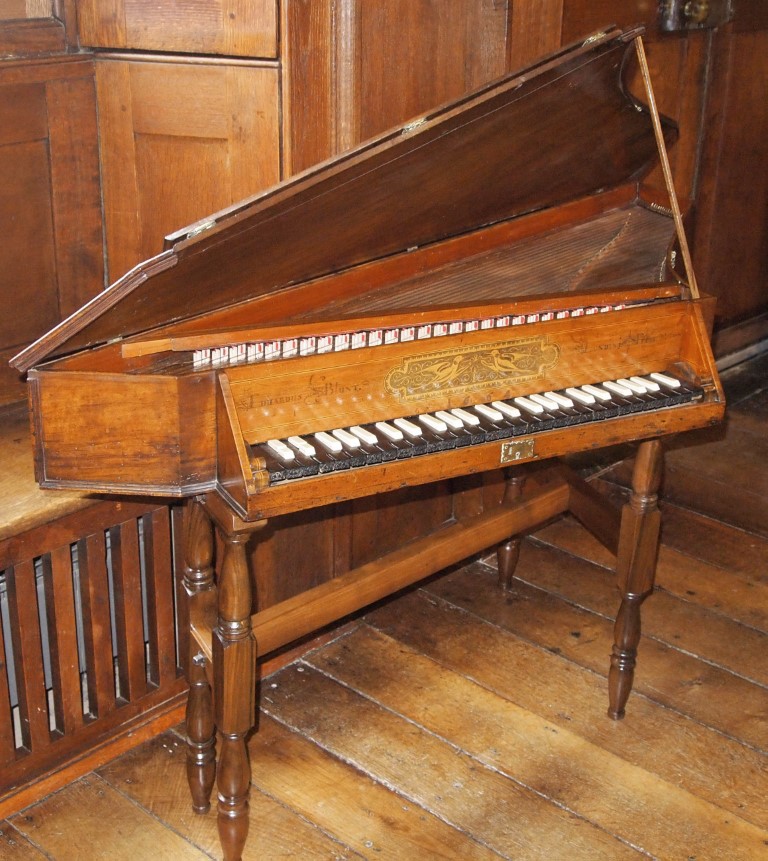
The essay is a bit long to transfer to this page directly, so please open the PDF below. All comments welcome!
Adobe Acrobat document [942.5 KB]
Making a Spinet
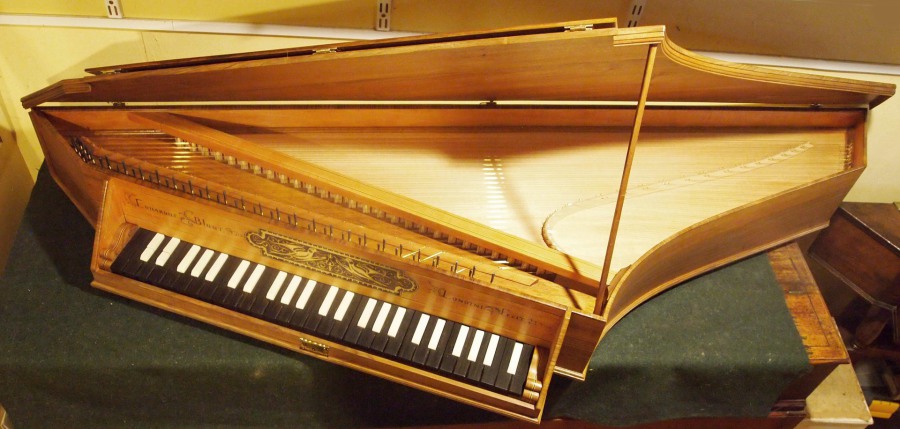
Some of you may have followed the construction - starting from a pile of wood - of this replica of a remarkable and important instrument. The spinet is now complete and playing well, and has gone to its new home in the Marlow Sigal Music Museum in South Carolina. Please see the Spinet Page for the story.
About the 'Webmaster' (David Hackett)
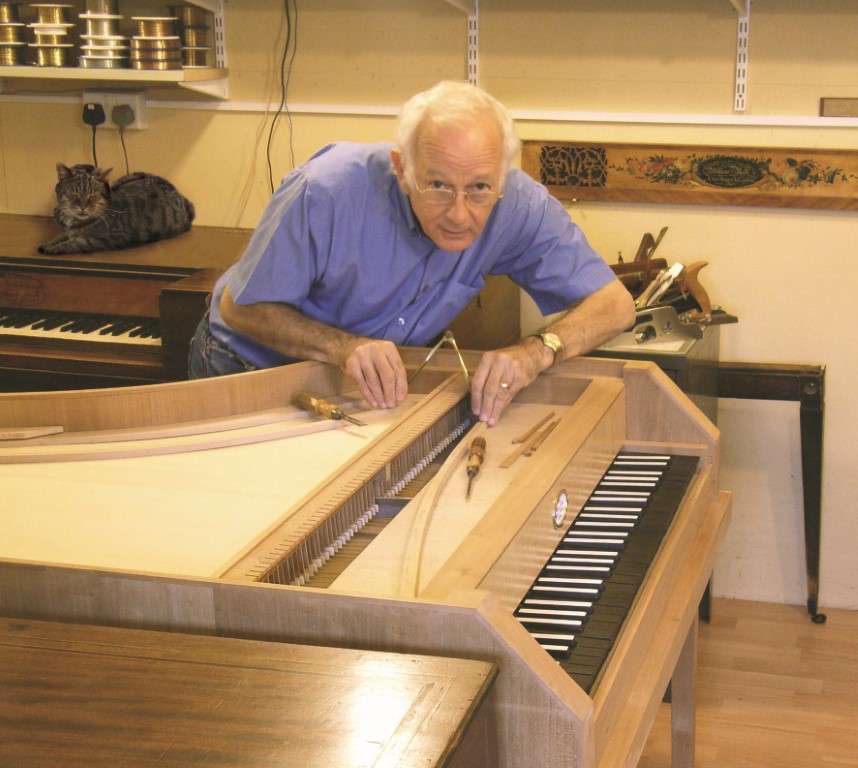
My only claim to respectability is that Carl Dolmetsch once offered to take me on as an apprentice. This was in 1962, when I had just shown him my first clavichord, and been his guest at Haslemere. However, he also advised me that it would be better to go to University, and I accepted his advice. Early Keyboard Instruments have therefore remained a hobby, and now happily retired, I am able to spend a bit more time enjoying them - and encouraging others, I hope..
 Print
Print 